Safety in an early years setting is mostly not about paperwork. It is about a small number of habits performed reliably, every day, by everyone.
Note: legal requirements, ratios, qualifications and recording duties differ by country and change over time. This article is about practice habits — your statutory requirements come from your regulator, and you should follow those exactly.
The daily checks that matter
- Walk the space before children arrive — hazards appear overnight: a broken latch, a loose fitting, something left within reach.
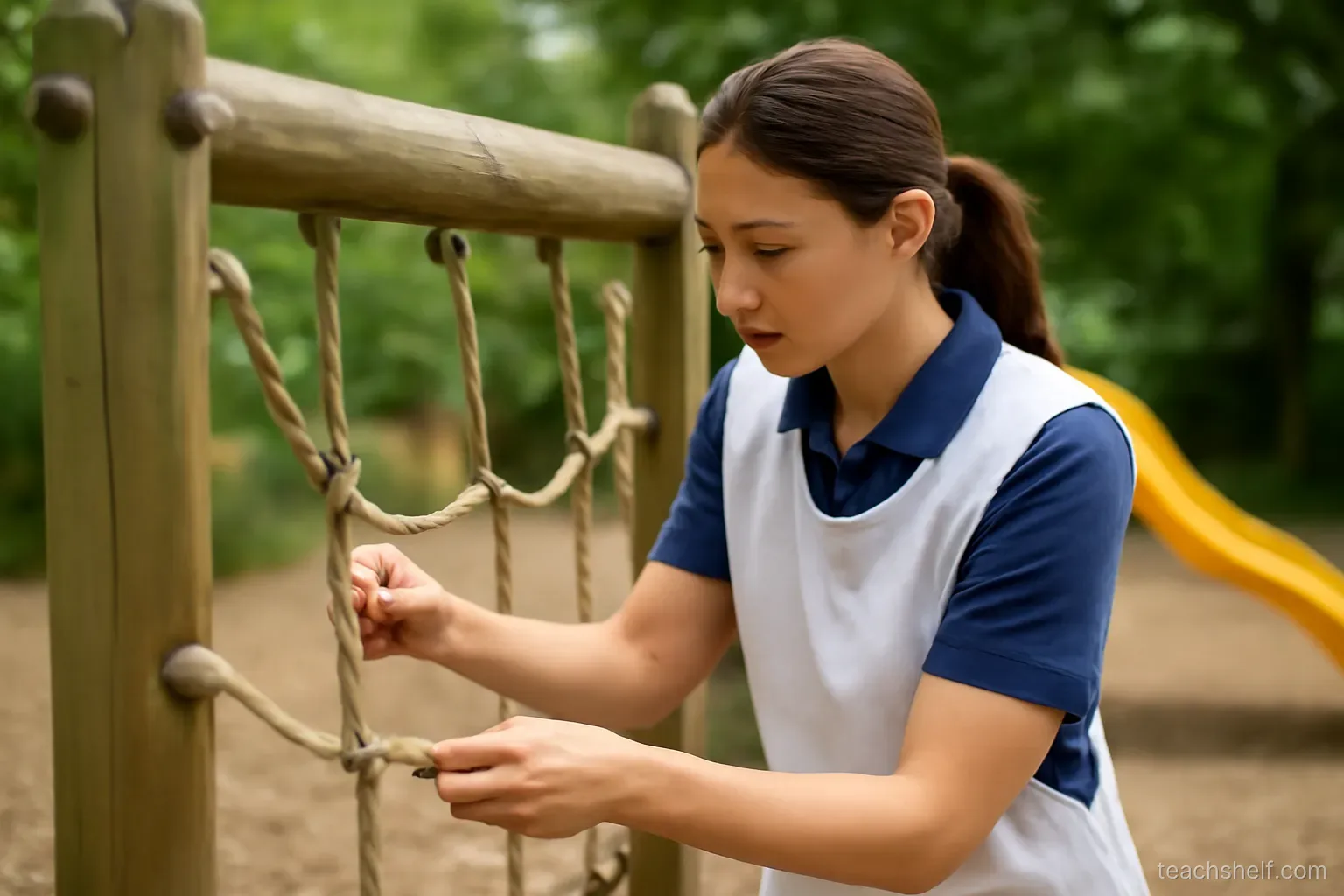
- Check outdoor areas separately, including gates, surfaces and anything blown in.
- Check the register at each session and again after any movement between spaces.
- Count children at every transition — moving between rooms, going outside, coming back in.
- Check exits are clear and fire routes unobstructed.
Make the walk-round a named person's job each day, not everyone's in general — shared responsibility with no name attached is how checks stop happening.
Supervision
- Know where every child is, continuously — not periodically.
- Position adults to see the whole space, including the areas children go to be unobserved.
- Watch water and small objects closely at all times, with no exceptions for brief moments.
- Maintain required ratios including during breaks, staff absence and handovers — these are the moments when ratios silently slip.
- Agree who is watching what when staff change over, out loud, rather than assuming.
Allergies and medical needs
- Record them formally and make sure everyone working with the child knows — including relief and temporary staff.
- Have the information visible where food is served, in a way that respects the child's privacy.
- Check every food item including items brought in for celebrations, which is a common failure point.
- Follow written procedures for medication — written parental consent, recorded administration, secure storage, and two people checking where your procedures require it.
- Know the emergency plan for each child with a known risk — who acts, what they do, where the medication is.
- Rehearse it. A plan nobody has practised is a document, not a plan.
When something happens
- Attend to the child first — records come afterwards.
- Follow your setting's first aid procedures and make sure a qualified first aider is always on site.
- 🔴 For anything involving breathing difficulty, a head injury, a suspected fracture, loss of consciousness, a severe allergic reaction, or a child who is not responding normally — call emergency services immediately. Do not wait to see whether it improves, and do not delay to contact the parent first.
- Inform parents the same day, in person where possible, for any injury.
- Record factually — what happened, when, who was present, what was done. Not opinions about cause.
- Report to your regulator where required, within the required timescale.
Learning from near misses
The part most settings skip, and the part that actually prevents incidents:
- Record things that almost happened, not only things that did.
- Review them regularly — near misses show you the incident you have not had yet.
- Look for patterns — same place, same time of day, same activity.
- Fix the condition, not the person. If a hazard depends on someone remembering, it will eventually be forgotten.
Building a culture where people speak up
- Thank people for raising problems, visibly. This is the single thing that determines whether you hear about hazards.
- Do not blame individuals for systemic failures — if one lapse can cause harm, the system was fragile.
- Make reporting quick — a difficult form means fewer reports, not fewer problems.
- Act on reports and say what you did. Nothing suppresses reporting faster than raising something and hearing nothing.
- Include everyone — the people who notice hazards first are often not the managers.
Safeguarding is separate and it is not optional
- Have a designated safeguarding lead and make sure every member of staff knows who it is.
- Every member of staff must know how to raise a concern and that doing so is always the right decision.
- 🔴 Concerns about a child's welfare are reported immediately to the designated person, following your procedure — not delayed for more evidence, and not investigated by you.
- Record concerns factually and store them securely.
- Train everyone, including relief staff, and refresh it.
Reviewing
- Review risk assessments after any change — new equipment, new layout, new activity, new age group.
- Practise evacuation regularly, at different times of day, including at less convenient moments.
- Check first aid supplies and qualifications before they expire, not after.
- Ask staff annually what they think the riskiest part of the day is. Their answer is usually right.
One thing worth remembering
The strongest predictor of a safe setting is not the quality of its documents.
It is whether a new member of staff would feel able to say that something looks unsafe — and whether anything would happen when they did.
Frequently asked questions
What daily checks matter most?
A walk-round of indoor and outdoor spaces before children arrive, checking exits are clear, and counting children at every transition — with the walk-round assigned to a named person each day.
When do ratios usually slip?
During breaks, staff absence and handovers. Agreeing out loud who is watching what during a changeover prevents most of it.
What should happen after an incident?
Attend to the child first, then record factually — what happened, when, who was present, what was done. Inform parents the same day and report to your regulator where required.
When should emergency services be called immediately?
For breathing difficulty, head injury, suspected fracture, loss of consciousness, severe allergic reaction, or a child not responding normally — without waiting to see if it improves and without delaying to contact the parent first.
Why record near misses?
Because a near miss shows you the incident you have not had yet — and fixing the condition rather than blaming a person is what prevents it.