If you have kept Apis honey bees before, this course starts by asking you to set most of that aside.
Stingless bees have no working sting, store honey in separate pots rather than combs, seal each brood cell the moment the egg is laid, and forage only 300 to 1,000 metres from the hive. Every one of those differences changes how you keep them. Bringing honey bee thinking across is the most common reason people lose money in this trade.
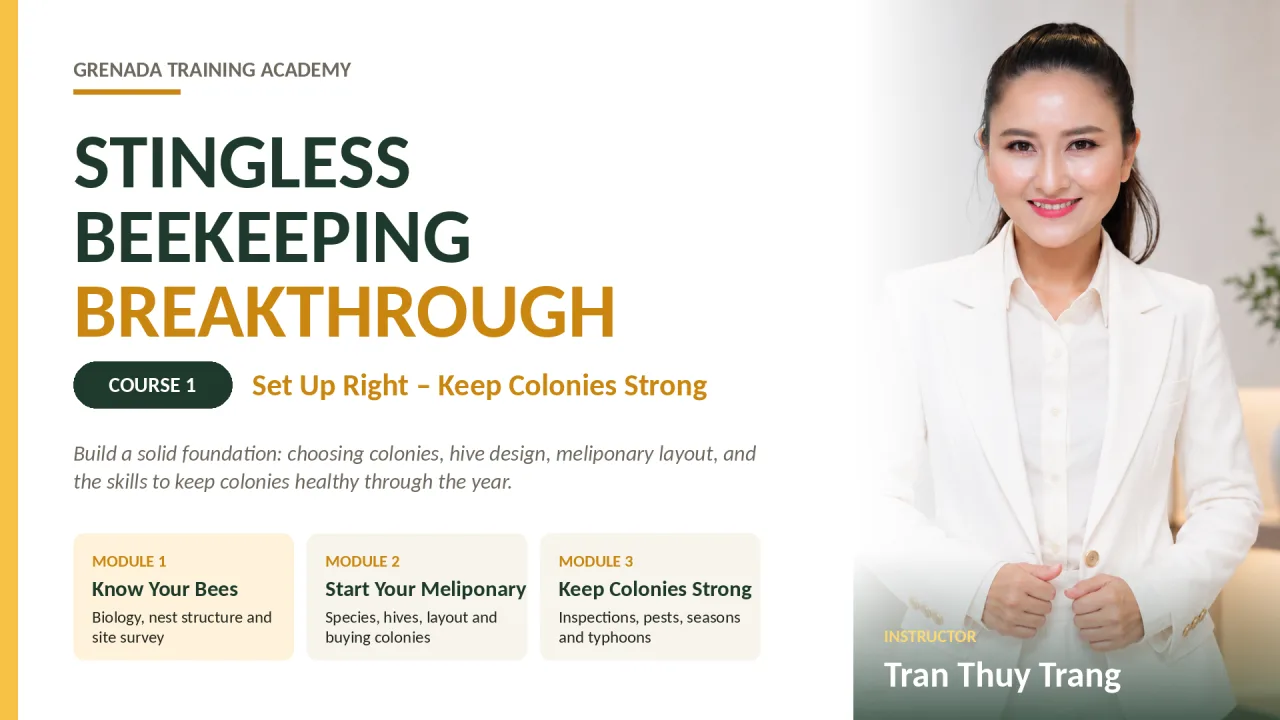
Course 1 answers one question: can your first colonies survive a full year?
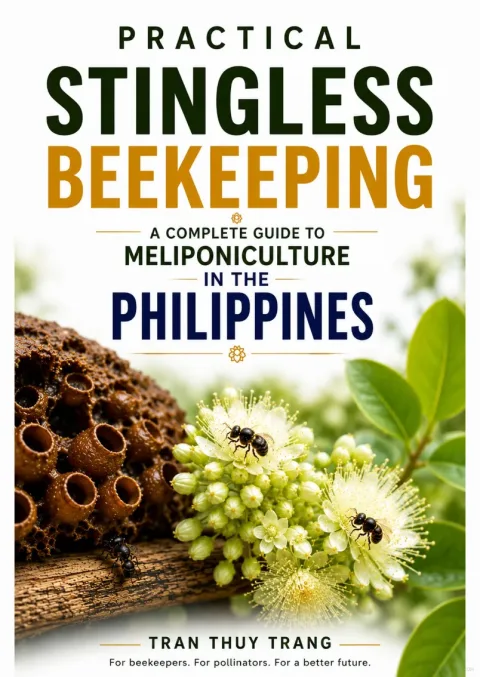
You will start by learning what you are actually keeping — the twelve stingless bee species recorded in the Philippines, seven of which exist nowhere else, and why Tetragonula biroi, known regionally as lukot, kiwot or kalulot, is the species most people should begin with. You will learn to identify a colony from three field signs without catching a single bee.
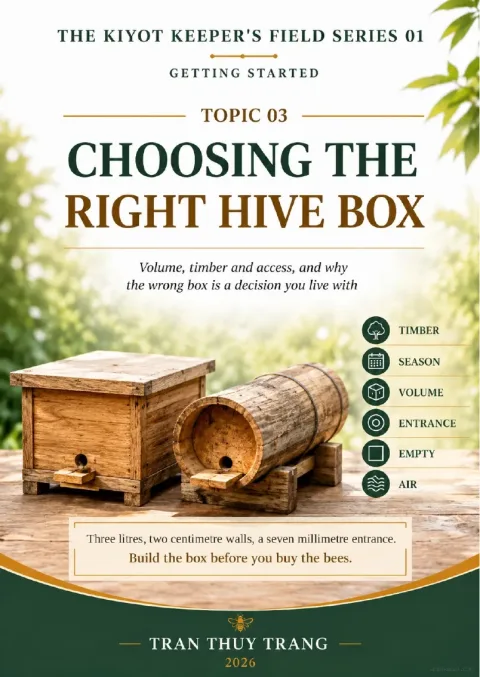
Then you build. Hive design and why internal volume must match the species. The coconut shell hive developed in Bicol, where it fits and where its limits are. Meliponary layout, including drifting, the problem that quietly weakens colonies at the end of a row while the keeper never works out why. And an eight point checklist for evaluating a colony before any money changes hands — the single lesson
most likely to pay for this course on its own.
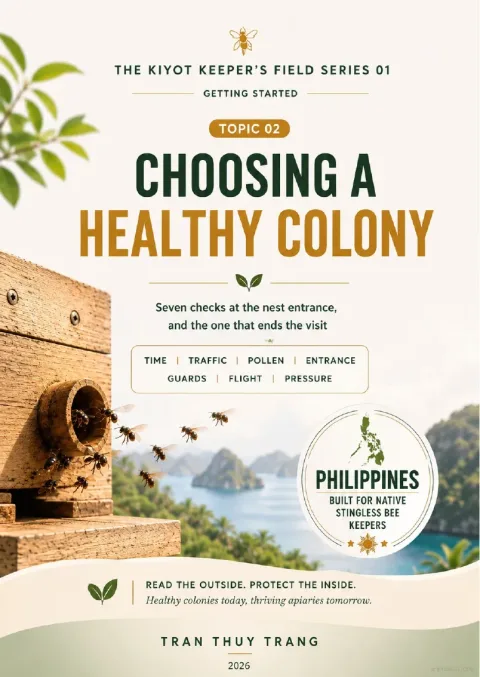
Finally you learn to keep them alive. Reading a colony from outside without lifting the lid. Diagnosing a queenless colony by looking for new brood cells rather than hunting for the queen. Phorid flies, which can destroy a strong colony in one to two weeks. And managing through our dry season, wet season and typhoon season as three separate jobs.
Throughout, you record everything in HiveID, so that by the end you have a working meliponary with real data behind it, not a folder of finished videos.